



27.01.2026
Outdoor garden socket outlet: How to plan the right socket outlet pillar - safe, durable and in keeping with the design
A garden socket is often the underestimated key to a functional outdoor area: lighting, pond pump, lawn robot, barbecue, e-bike charging or seasonal decorations - many things run more reliably when electricity does not have to be organised via temporary extensions. At the same time, electrics, weather and mechanical loads all come together in the garden. If you plan properly, you reduce risks and increase comfort - permanently.
In this article, you will learn how to size a garden socket outlet sensibly, what role socket outlet pillars play in energy management and what you should look out for in terms of material, protection rating (IP), connection types (Schuko/CEE) and installation. The focus is on practical criteria - so that your solution fits in with your property both technically and visually.
Why a garden socket outlet is often the better solution as a socket outlet pillar
A classic outdoor socket outlet on the house wall is a good start for many applications. However, as soon as several consumers, different garden areas or visible cable routing come into play, the limits quickly become apparent. This is precisely where a socket column offers advantages:
- Centralised power distribution at the point where it is needed - e.g. at the seating area, by the shed or by the flower bed.
- Organisation instead of cable clutter: shorter distances, fewer tripping hazards, fewer temporary extensions.
- Scalability: Multiple versions (e.g. 2-way, 3-way, 4-way or more) allow parallel use.
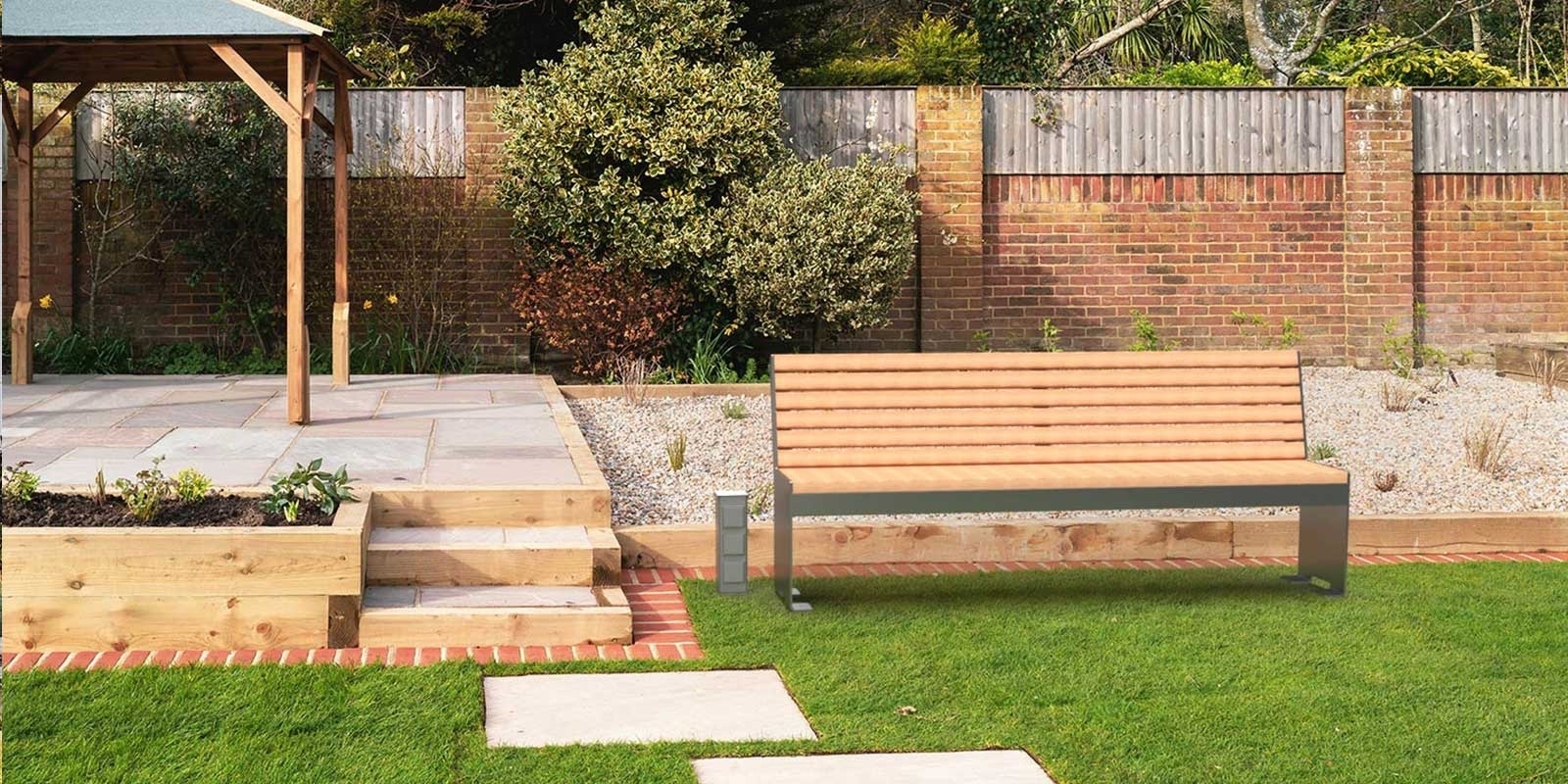
- Design integration: A neatly positioned energy profile looks like a deliberate outdoor element - not a makeshift solution.
Typical areas of application: from lighting to e-bikes
Whether you have a small city garden or a large plot of land, the need for electricity in outdoor areas usually grows gradually. The most common applications for a garden socket (or a socket outlet column) are
1) Garden and path lighting
Ground spots, bollard lights, fairy lights or seasonal decorations often require several connection points. A socket column reduces cable lengths and makes it easier to switch on and off using timers or smart adapter plugs.
2) Pond, fountain and irrigation
Pumps, filter systems or solenoid valves often run for long periods of time. What counts here is a weatherproof installation and a logically planned power supply that also takes maintenance and winter operation into account.
3) Garden maintenance & tools
Hedge trimmers, shredders or high-pressure cleaners need power - and a power connection directly where the work is being carried out. Depending on the device, a more robust connection type may also make sense (more on this in a moment under Schuko vs. CEE).
4) E-bike and battery technology
Chargers for e-bikes, garden tools or power stations are increasingly being used outdoors - for example in a carport, near the driveway or next to an outbuilding. A well-positioned charging pole can make charging more practical without having to run cables through the house.
Outdoor safety: IP protection, circuits and residual current protection
The following applies to a garden socket: safety is not an "extra", but a basic requirement. Outdoor areas are much more demanding than indoor areas due to moisture, splash water, temperature fluctuations and mechanical stress. These points are particularly important:
IP protection class: what does IP44 mean in the garden?
The IP protection class describes how well an enclosure is protected against the ingress of foreign bodies and water. IP44 is often relevant in the garden - this stands for protection against solid foreign bodies from 1 mm and against splash water. In practice, IP44 is sufficient for many typical applications, as long as the socket outlet is installed correctly and is not permanently exposed to direct water jets.
Residual current protection (RCD/FI) and separate circuits
A residual current circuit breaker (RCD/FI) is standard for socket circuits in many installations. This is particularly important outdoors, as moisture and damaged cables can increase risks. It may also make sense to place certain loads on separate circuits - for example:
- Continuous operation (pond pump, irrigation) separate from tools (shredder, cleaner).
- Lighting separate from sockets to make troubleshooting easier.
- Separateoutbuildings (garden shed) if further sub-distribution boards are planned there.
Important: Work on the electrical installation should be carried out by a qualified electrician. This article provides support with planning and selection - but does not replace installation in accordance with applicable standards and local specifications.
Schuko or CEE: Which socket do you need in the garden?
When choosing a garden socket, there are often two main connection types: Schuko (typical for household appliances) and CEE (robust industrial plug connection). Which variant is suitable depends on your consumers and the desired load capacity.
| Criterion | Schuko (230 V) | CEE (e.g. 230 V / 400 V depending on version) |
|---|---|---|
| Typical use | Lighting, chargers, pond pump, garden tools | Higher loads, special machines, construction site/workshop use |
| Plug-in system | Widely used in the household | Robust, intended for defined loads and plugs |
| Planning question | Are 1-6 Schuko sockets sufficient at the desired locations? | Are there devices that explicitly require CEE (e.g. certain machines)? |
| Recommendation | The standard for most gardens | Useful if real CEE consumers are present or planned |
In many cases, a Schuko socket outlet pillar as a garden socket outlet is the pragmatic basis. However, if you know that CEE consumers are used (or will be used in the future), you can plan a suitable power pole directly - ideally where devices are typically connected (e.g. work area, carport, outbuilding).
Material & surface: V2A stainless steel, powder coating and care
Outdoor products are only as durable as their material concept. Corrosion resistance, stability and a surface finish that matches the architecture are therefore important for a pillar-shaped garden socket. Stainless steel and powder-coated versions are particularly popular.
V2A stainless steel: robust, timeless, easy to clean
Stainless steel V2A (e.g. material ____00_9__) is often used outdoors because it is durable and offers a clear, modern appearance. A polished surface can make fingerprints and small signs of wear appear less noticeable - a plus in everyday life.
Powder coating: colourful integration into the surroundings
A powder-coated socket pillar can be deliberately understated (e.g. in anthracite) or set specific accents. This is interesting for many properties because the colour and surface can be matched to the fence, railings, lights or garden furniture. When planning, make sure that the surface matches the use: Highly frequented areas benefit from hard-wearing coatings and a stable construction.
Care: how to keep the garden socket looking good in the long term
- Clean regularly: remove dust, pollen and splash water deposits (soft cloth, mild detergent).
- No aggressive agents: Abrasive cleaners or hard sponges can damage surfaces.
- Check seals and hinged lids: A quick function check is worthwhile, especially with frequent use.
Installation & location: what really matters when planning
The best garden socket is of little use if the location is impractical. Good planning starts with an honest inventory: Where do you need electricity today - and where could it be needed in the future?
Choice of location: Accessibility, routing, protection
- Accessibility: Sockets should be accessible without tripping - even in the dark.
- Routing: Position the column so that cables remain as short as possible and do not run across walkways.
- Spray areas: Consider watering, pond proximity or cleaning zones.
- Mechanical load: Lawn mower, trimmer or snow shovel - plan enough distance from the work zone.
Mounting: stable base for outdoor use
Socket pillars are typically permanently mounted. Depending on the model, they are attached using a base plate for screw mounting. A solid base pays off in practice: It ensures a secure stand and protects the installation from permanent tension caused by wind, pulling on the cable or light impacts.
Installation by qualified personnel only
Even if you can easily plan the selection of a garden socket yourself, the electrical connection, earthing work, protective measures and tests should be carried out by a qualified electrician. This will ensure that the type of protection, fuse protection and installation are compatible.
Selection guide: Which garden socket is right for your project?
In the context of "energy management", you will often come across terms such as energy pillar, socket outlet pillar or "prepared" vs. "complete". The following questions will help you to quickly find out which design suits your situation.
- How many consumers at the same time? (e.g. 2 sockets for seating area, 4 sockets at the shed)
- Schuko or CEE? (household/lighting vs. special machines)
- Which protection class is appropriate? (e.g. IP44 for splash water; check exposed locations separately)
- Material/look: polished stainless steel V2A or powder-coated in RAL colour?
- Installation location: Driveway, patio, garden shed, bed zone - with a view of paths and cables.
- Expandability: Is a second column or an additional circuit conceivable at a later date?
"Prepared" or "complete" - what does that mean?
A "complete" socket pillar is usually equipped with the required sockets. "Prepared" variants are designed so that the electrical equipment can be added on a project-specific basis - for example, if the design is to be tailored precisely to your application (socket type, number, wiring concept). This can be particularly helpful if your garden concept includes several zones or if specialist planning and implementation are to work closely together.
Practical example: Stainless steel socket outlet pillar with IP44 and Schuko
Many garden projects rely on a weatherproof stainless steel socket outlet pillar with hinged covers, suitable for outdoor use. Typical features are a stable construction, defined socket outlet ratings (e.g. 16 A / 250 V for Schuko) and a protection class that takes splash water into account. The decisive factor is that the design matches the installation situation and is connected professionally.
FAQ: Frequently asked questions about garden sockets
For outdoor sockets, an RCD (≤ 30 mA) is generally required according to current VDE requirements and is implemented as standard in practice. The RCD protects against dangerous fault currents and significantly increases safety.
The RCD can be located in the house distribution board or implemented upstream as a protection module. The design and testing should be carried out by a qualified electrician.
Surge protection is particularly recommended when sensitive consumers are operated outdoors, such as control systems, power supplies, pond or irrigation technology. Surge protection is often implemented centrally in the distribution board or via upstream protective devices instead of being integrated directly into the socket column.
An outdoor socket column should meet technical and design requirements:
- Weather-resistant, low-corrosion materials
- Suitable IP protection class (at least IP44, IP55 often recommended)
- Professional connection to the mains supply
- Residual current device (RCD) and suitable fuse protection
- Stable, secure installation (e.g. foundation or ground anchor)
Important: Installation in outdoor areas should always be planned and carried out by a qualified electrician.
Many socket columns are designed for 230 V / 16 A. This corresponds to a maximum power of approx. 3,680 W per socket (under ideal conditions). However, the decisive factor is the total load of all connected consumers and the design of the supply line.
Protection is usually provided by a circuit breaker in the distribution board. For multiple sockets or higher continuous loads, expert planning is recommended (wire cross-section, protection, selectivity).
UV resistance is important because sunlight causes long-term wear and tear on materials and coatings. High-quality socket columns rely on UV-stable surfaces (e.g. suitable powder coating) and weather-resistant components. For visible plastic parts, explicit attention should be paid to UV stability in order to prevent embrittlement and fading.
In principle, you can install a power strip column in your garden yourself. This includes earthworks, laying the foundations and erecting the column. However, for safety and liability reasons, the electrical connection to the mains must only be carried out by a qualified electrician.
According to VDE guidelines, connection to the 230 V mains supply is reserved exclusively for qualified electricians. Carrying out electrical work yourself can be life-threatening and will result in the loss of your warranty and insurance cover. Only preparatory work such as laying foundations, installing empty conduits and erecting the column is permitted.
- Only carry out installation when the power is off
- Use suitable protection class and seals
- Use RCD ≤ 30 mA
- Only use cables for outdoor use (e.g. NYY-J)
- Comply with VDE and manufacturer specifications
Suitable products


