




Which door chime suits my doorbell system?
A door chime should not be chosen solely on volume or ringtone. The decisive factor is first how the door call from the doorbell push button or door station is transmitted to the chime.
For an existing door intercom system you usually need a chime that is explicitly compatible with the system used. Gira and COMELIT, for example, operate with their own 2-wire systems. A DoorBird IP door chime, on the other hand, is integrated into the respective network and DoorBird system environment.
If a traditional doorbell is to be expanded without major renovation, a wireless chime with a matching transmitter can be an attractive alternative.
Wired door chime, wireless chime or IP chime?
The suitable type depends primarily on the existing doorbell and door communication technology.
| Chime type | Signal transmission | Typical use | Important when choosing |
|---|---|---|---|
| Wired system chime | via cable or system bus | existing or newly planned door communication system | check manufacturer, bus system and compatible system components |
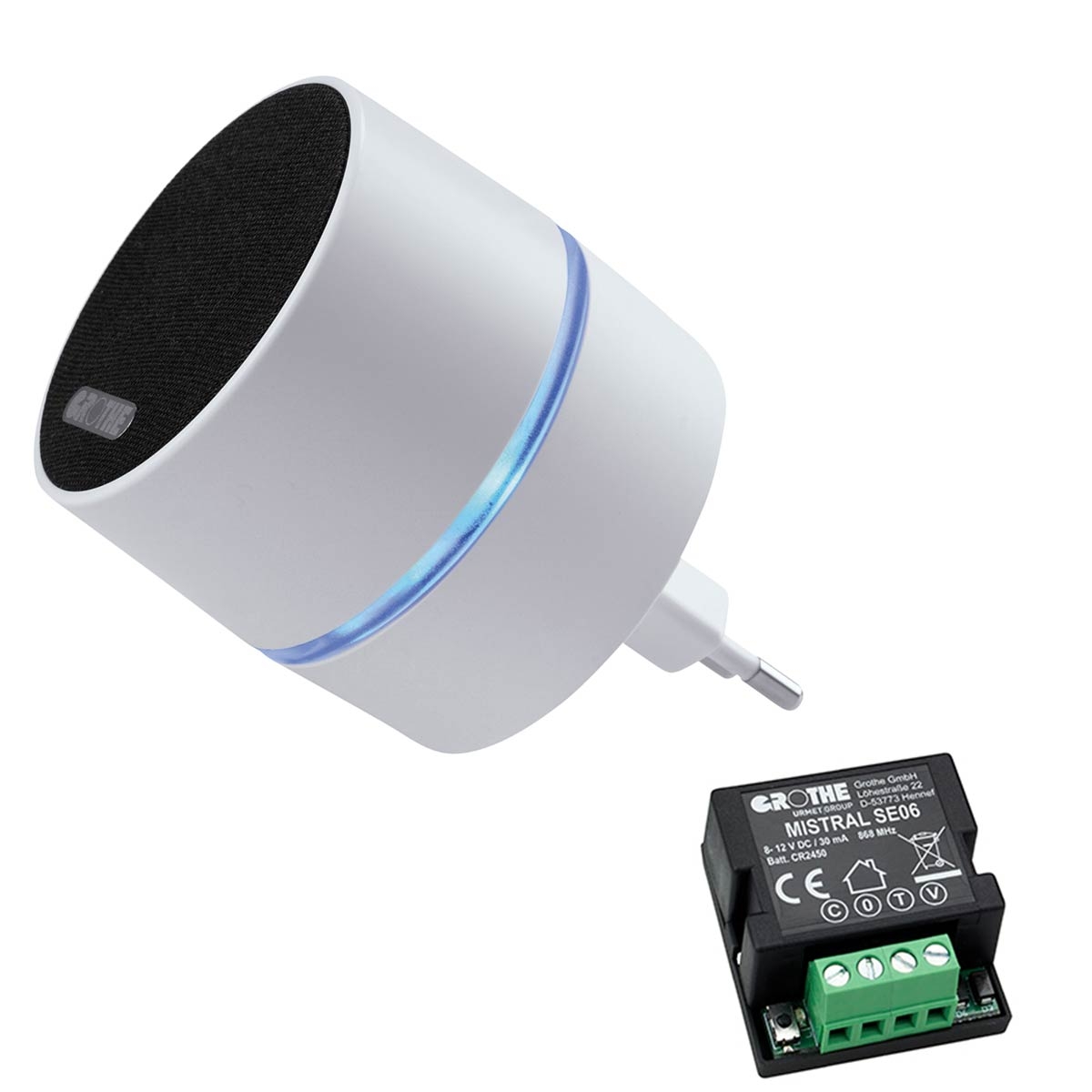
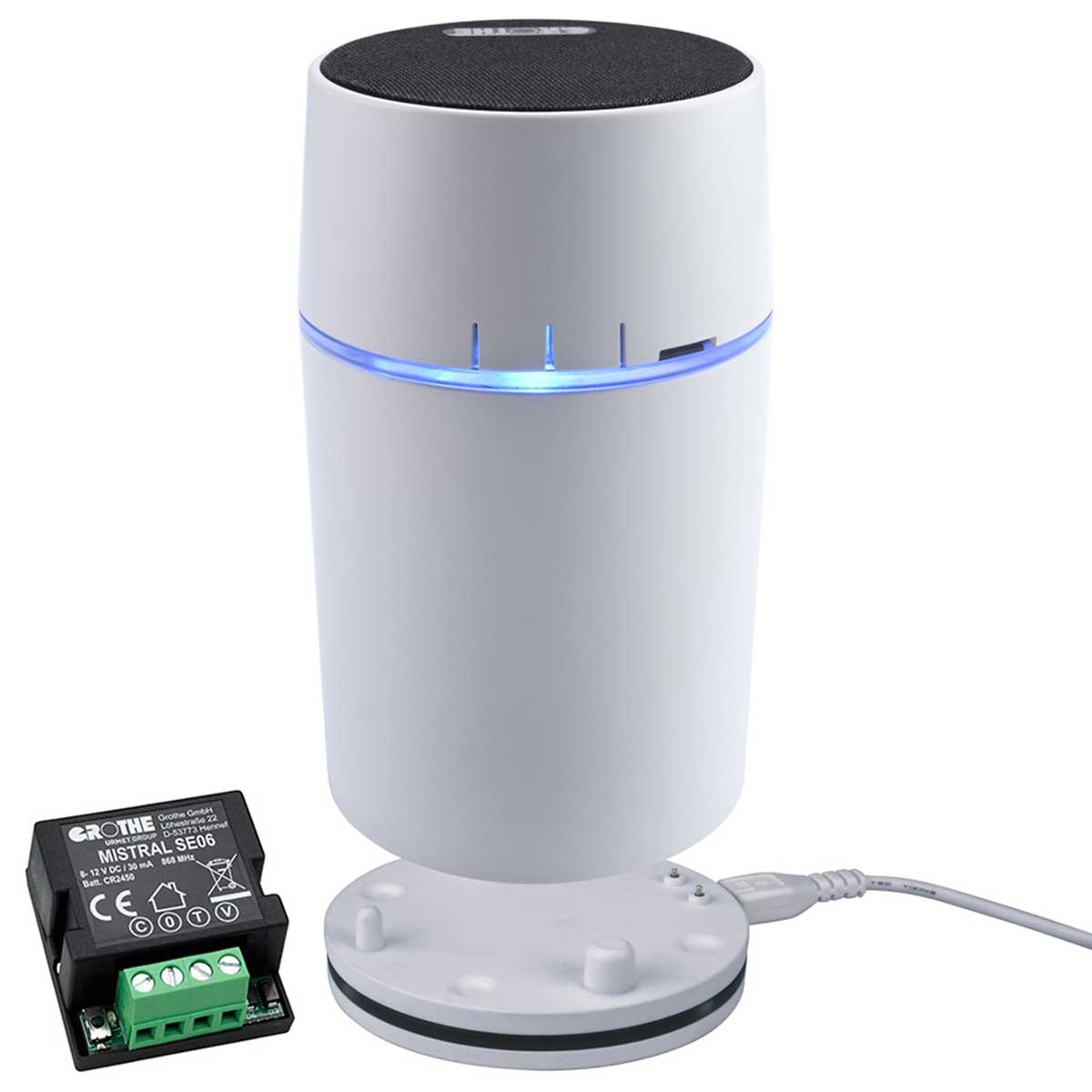
| Wireless chime | radio signal between transmitter and receiver | retrofitting or flexible positioning of the chime receiver | matching transmitter, power supply and actual radio conditions in the building |
| IP door chime | network via Ethernet or, depending on the system, Wi‑Fi | compatible IP door stations and networked door communication | check system compatibility, network and power supply or PoE |
| Additional chime | depends on the existing door communication system | additional signalling point on another floor or in a hard-to-hear room | observe expansion options of the existing system |
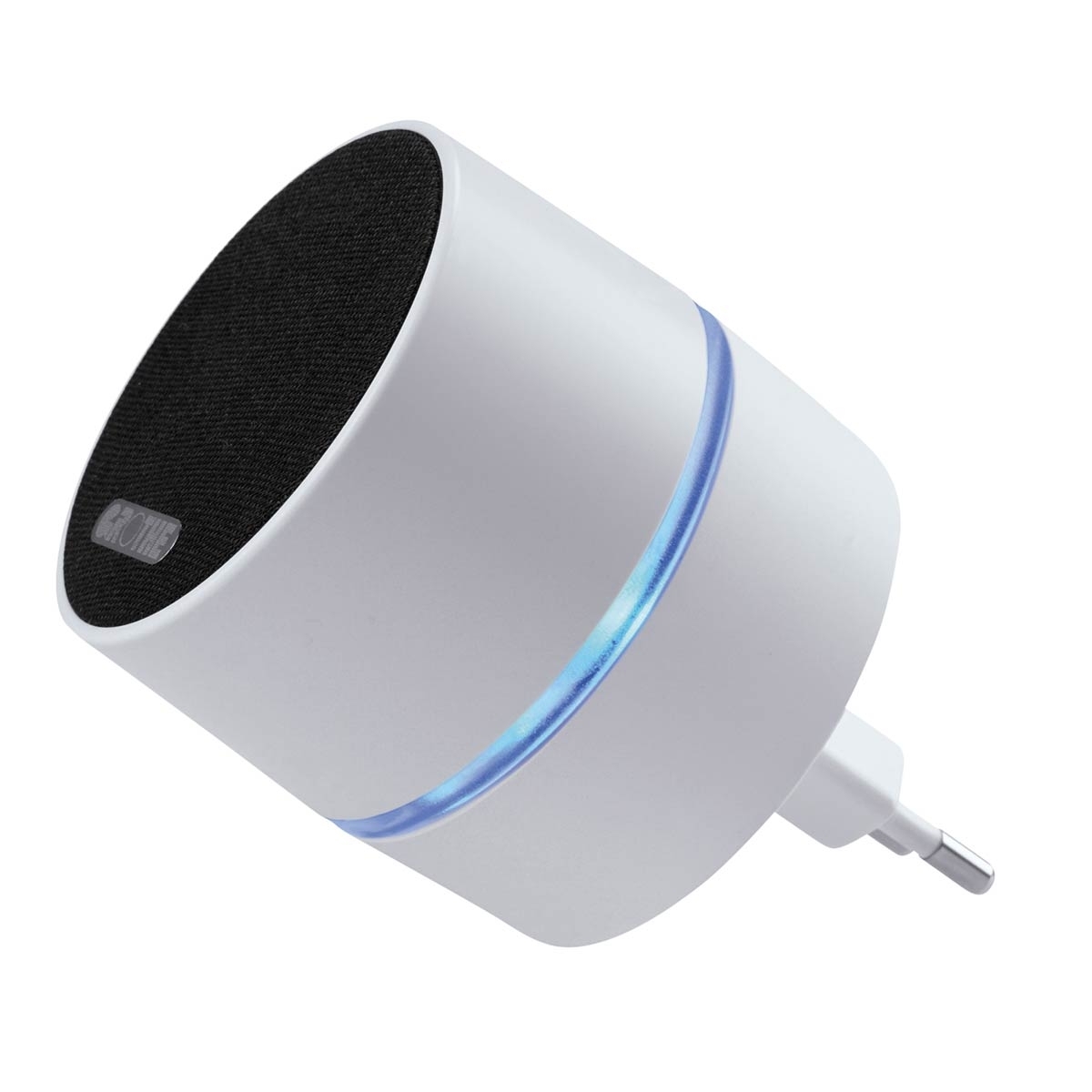
Can an existing wired doorbell push button be used with a wireless chime?
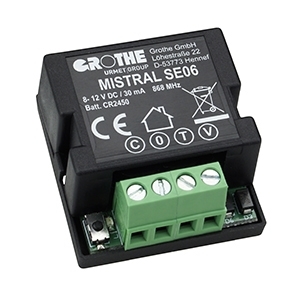
With suitable solutions, yes. A flush‑mounted wireless transmitter can be installed behind the existing mechanical doorbell push button and transmit the button signal to a wireless chime.
This means the visible doorbell push button at the entrance does not necessarily need to be replaced. This is particularly useful if a BML doorbell plate or a doorbell push button in the mailbox is already present.
However, note that wireless range always depends on the actual installation situation. Walls, doors, metal parts and other structural elements can weaken the radio signal.
Which door chime belongs to DoorBird, Gira or COMELIT?
In a door communication system the chime is often part of the respective system world. A device that looks similar is therefore not automatically compatible.
| Solution | Connection | Classification |
|---|---|---|
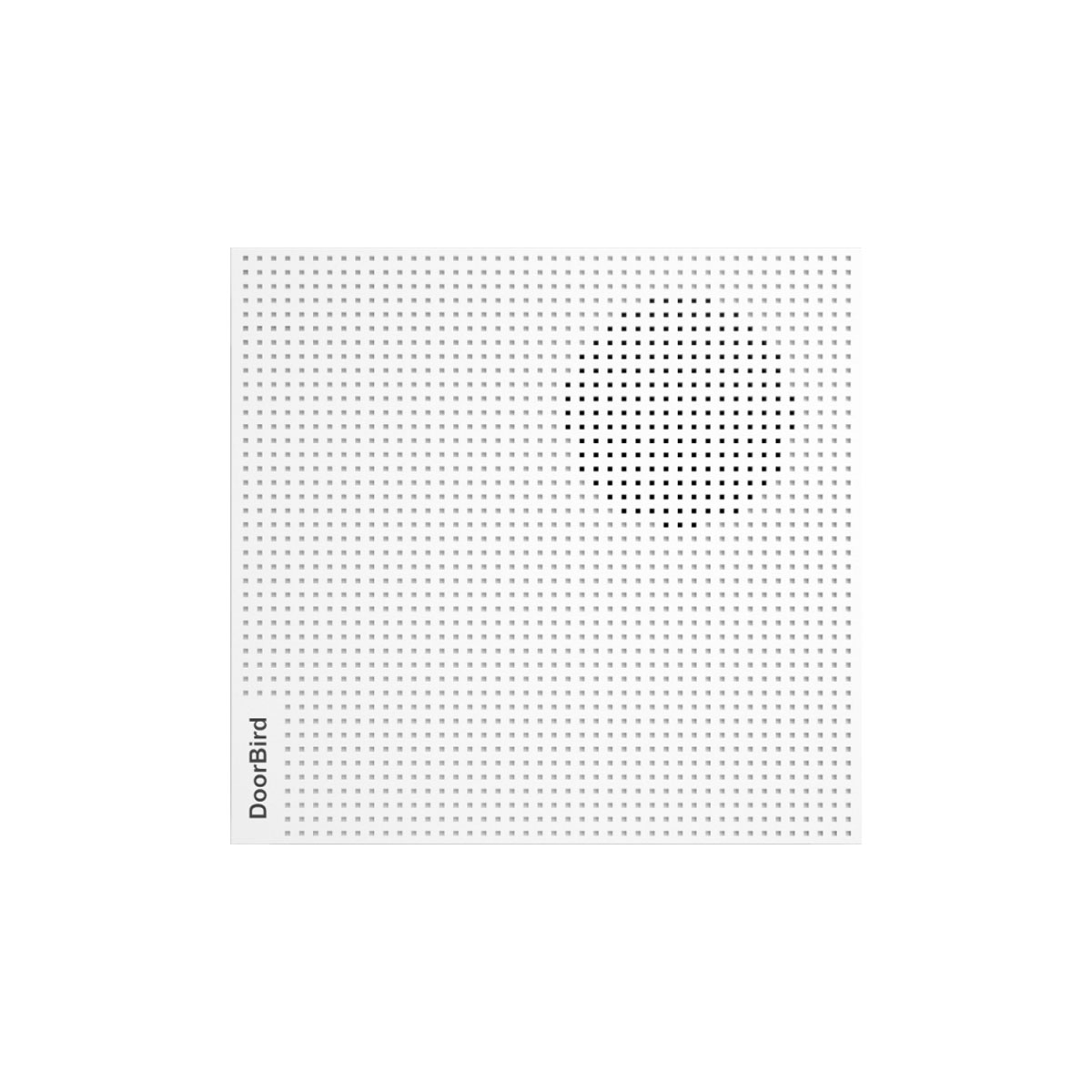
| DoorBird IP door chime A1061W | Ethernet or Wi‑Fi; PoE possible with a network connection | IP door chime as an addition to compatible DoorBird IP video door stations |
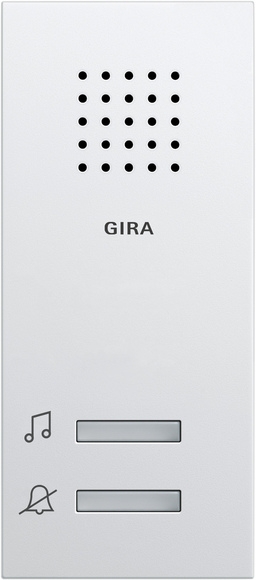
| Gira chime AP | Gira 2‑wire bus | additional call signalling within the Gira door communication system |
| COMELIT additional chime 1229A | COMELIT 2‑wire bus | additional chime for a compatible COMELIT door communication system |
| CALIMA / MISTRAL | radio between transmitter and chime receiver | flexible wireless solution or retrofitting of an existing mechanical push button |
When is an IP door chime sensible?
An IP door chime is interesting when a compatible network‑based door station is already in use and a fixed acoustic signalling device in the building is additionally desired.
The DoorBird A1061W, for example, can be connected to the network via Wi‑Fi or Ethernet. With an Ethernet connection, power supply via Power over Ethernet is also possible.
An IP chime does not automatically replace an indoor station: it primarily serves call signalling. For speech connection, camera image and further control functions, a separate indoor station or the respective system solution may be required.
Door chime or indoor station – what do I need?
Door chime
A door chime makes the incoming call audible and, depending on the model, offers additional visual signals, different melodies or call differentiation.
It is the right choice when primarily additional or independent call signalling is required.
Indoor station
An indoor station is part of the actual door communication. Depending on the system it enables speech, camera image, door opening and other functions.
View indoor stations →Where should a door chime be installed?
Choose a location where the chime will be reliably perceived in everyday life. In larger apartments, multiple floors or closed-off work areas, an additional chime can be sensible.
Wireless receivers can often be positioned more flexibly. For wired system chimes the mounting location also depends on cable routing and the specifications of the respective door communication system.
Why choose the door chime together with the door communication?
At BML planning does not end at the doorbell push button. Door station, mailbox, doorbell push button, indoor station and call signalling can be considered together.
The range therefore includes both system-related door chimes for DoorBird, Gira and COMELIT as well as wireless solutions from Grothe for classic doorbell push buttons and retrofits.
This allows a more targeted decision as to whether an additional chime within an existing system world or an independently positionable wireless solution is more suitable.
Overview of door communication →What should be considered when connecting a door chime?
Installation depends on the chime type. A plug‑in wireless chime is integrated differently than a Gira or COMELIT system chime on the 2‑wire bus or a DoorBird device on the network.
Therefore always check the documentation of the specific device before connection. System-bound door communication, fixed electrical connections and the associated commissioning should be carried out by qualified personnel according to the manufacturer's specifications.
Frequently asked questions about door chimes and bell chimes
What is the difference between a door chime and a bell chime?
In common usage both terms are often used for the acoustic signalling device of a doorbell system. For product selection, the designation is less important than the appropriate connection and system technology.
What are the advantages of a wired door chime?
A wired chime can be directly integrated into a compatible door communication or bus system. This is particularly useful when a suitable Gira, COMELIT or other system is already present.
Can I use a wireless chime with my existing doorbell push button?
With suitable systems, yes. A flush‑mounted wireless transmitter can be installed behind an existing mechanical doorbell push button and then transmit the button signal to the wireless chime.
How far does a wireless chime reach?
The actual range depends on the specific product and the structural environment. Walls, doors, reinforced concrete and metal surfaces can dampen a radio signal much more than a line‑of‑sight connection.
Can I install an additional door chime on the upper floor?
For systems that support it, additional signalling points or chimes can be used. How many devices are possible and how they are connected depends on the respective door communication system.
Do I need a chime if I already have an indoor station?
Not necessarily. Many indoor stations already signal the door call themselves. An additional chime can, however, be useful if the call should be clearly audible in other rooms or on other floors.
Is a DoorBird IP door chime a normal wireless chime?
No. The DoorBird IP door chime belongs to the network‑based DoorBird system world. It can be connected via Ethernet or Wi‑Fi and is intended for compatible DoorBird door communication.
Can I connect a Gira chime to a COMELIT system?
Not as an arbitrary interchangeable component. Gira and COMELIT use their own system technologies. Use only components whose compatibility with the existing door communication system is expressly specified.
We can help you choose the right door chime
Let us know which doorbell push button or door station you have and whether you need an additional chime, a wireless retrofit or a system‑bound signalling device. For existing intercom systems, manufacturer and model designation help with identification.
