


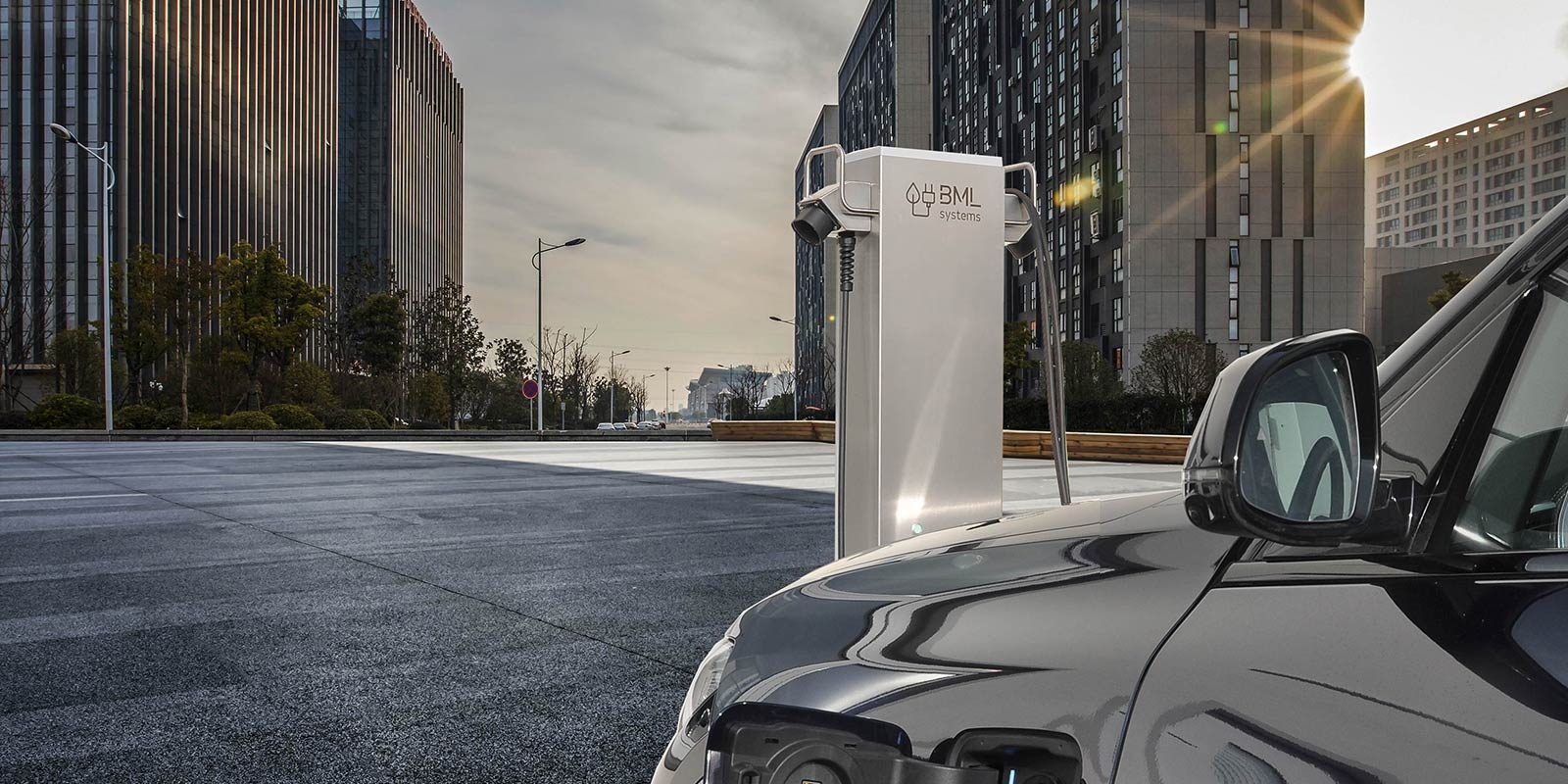


A charging solution that suits everyday use and complements the building
The best charging station is not necessarily the one with the highest power. It must suit the vehicle, the available electrical connection, the parking space and the people who use it every day.
At BMLsystems, we combine charging technology with the design standards of the mailbox manufactory. Rather than an arbitrary technical box, we create wallboxes and charging columns whose housing, mounting method, colour and operation can be deliberately matched to the house, carport, driveway or property.
Select a wallbox, charging column, charging cable or e-bike charging station
The installation location and intended use quickly narrow down the options. The compact product areas lead directly to the solution that suits your project.

Discover wallboxes →

View charging stations →

Choose charging cables →

View e-bike charging solutions →

Compare power columns →
Which charging solution suits which application?
The following guidance does not replace electrical planning but helps with the initial decision between wall mounting, freestanding solutions and mobile accessories.
| Solution | Particularly suitable when … | Clarify beforehand | Select directly |
|---|---|---|---|
| Wallbox | a suitable wall is directly available at the parking space | mounting method, vehicle, available connection capacity, cable or socket | Wallboxes |
| Charging column | the charging point should be freely positioned on the parking space, driveway or property | foundation, cable routing, collision protection, one or several charging points | Charging stations |
| Charging cable | a charging point already exists or a separate cable is required | plug type, current strength, phases, cable length and vehicle compatibility | Charging cables |
| E-bike charging station | multiple bicycles need to be parked securely and batteries charged conveniently | number of users, sockets, compartments, installation, accessibility and weather protection | E-bike charging stations |
| Power column | additional outdoor power connections are required alongside charging | Schuko or CEE, number of modules, loads, protection concept and installation location | Power columns |
Why BMLsystems does not stop at the socket
A charging installation will be used and considered for many years. Therefore we consider not only the charging process itself but also the housing, operation, location and the impact on the building.
Technology that blends in
Reduced forms and coordinated proportions ensure that a wallbox or charging column does not appear as a foreign object next to a house, carport or entrance.
Robust metal housings
Depending on the series, stainless steel, aluminium or coated metals are used. Many versions can be colour-matched to the façade, gate, mailbox or outdoor light.
View RAL colours →From private homes to commercial properties
The range extends from a single wallbox to freestanding columns and solutions for multiple charging points. Which technology is suitable is always decided based on the specific project.
Planning before the first spadeful of earth
Cable routing, foundation, charging power, access and possible networking should be determined early. This avoids visible rework and unnecessary compromises.
Plan charging power, connection and operation together
The vehicle's maximum charging power and the available power at the building determine which charging station can be used sensibly. A higher rated power does not automatically mean shorter charging times if the vehicle or connection cannot use it.
Operation is also part of the decision: permanently attached cable or Type 2 socket, free access or authorisation, a single charging point or load distribution. Photovoltaics, energy management and network connectivity are possible depending on the product and overall system and should be coordinated with the electrical planning.
Frequently asked questions about wallboxes, charging stations and electromobility
What is the difference between a wallbox and a charging column?
A wallbox is mounted on a suitable wall. A charging column stands freely and is suitable for parking spaces without a direct wall surface or for charging points designed to be particularly visible. The appropriate construction type depends on location, cable routing and use.
Is 22 kW always better than 11 kW?
No. What matters are the vehicle's maximum AC charging power, the available connection capacity and approval by the electrical planner. A higher rated power only offers an advantage if the vehicle and infrastructure can actually use it.
Is a fixed charging cable or a Type 2 socket more sensible?
A fixed cable is particularly convenient in everyday use because it is ready at the charging point. A socket looks tidier and allows the cable to be exchanged. Cable length, parking arrangement and personal use are deciding factors.
Can a wallbox work with photovoltaics or load management?
This is possible with suitable products and a compatible overall system. Interfaces, energy meters, inverters, control systems and networks must be compatible. The specific function should be checked for system compatibility before ordering.
Who is allowed to install a wallbox or charging column?
Planning, electrical connection, protective measures, testing and commissioning may only be carried out by appropriately qualified specialists. A freestanding charging column also requires a foundation and protected cable routing.
Which solution is suitable for charging e-bikes?
For individual chargers, a properly planned socket column may suffice. For multiple bicycles, dedicated bicycle charging stations with parking bays and, depending on the model, protected compartments are the more comfortable solution.
Can a charging station, mailbox and outdoor light match each other?
Many BML solutions can be coordinated in terms of shape, metal finish and RAL colour. Which combinations are available depends on the chosen series and products.
Which charging solution suits your parking space?
Compare the product areas or send us your location, vehicle, preferred mounting method and project scope. This allows a solution to be selected that is technically sensible and stylistically suited to your building.
