


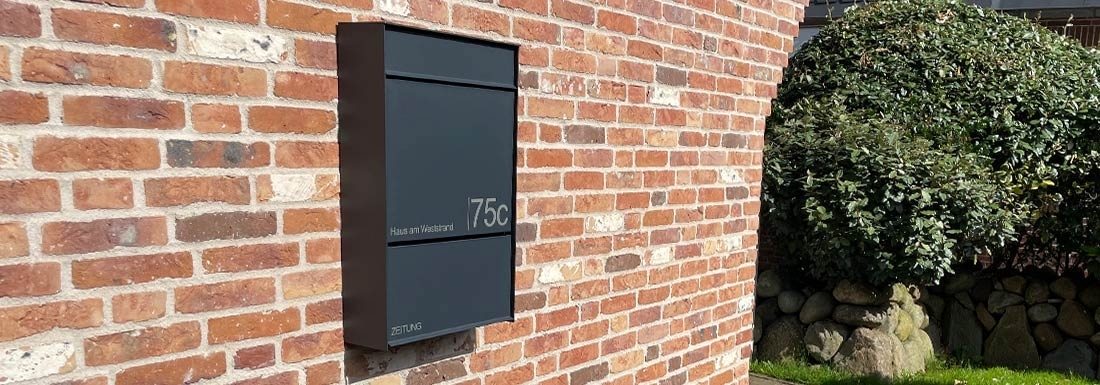


Buy a surface-mounted mailbox: choose the right size, wall mounting and features
A surface-mounted mailbox sits entirely in front of the façade and is therefore usually easier to retrofit than a system recessed into the wall. Crucial factors are sufficient space, a load-bearing fixing substrate, the required mail volume and an easily accessible collection door.
Surface-mounted, flush-mounted or through-wall: which wall solution fits?
Surface-mounted is particularly attractive when no wall recess should be created. Flush-mounted reduces the visible installation depth, while a through-wall solution can place the inlet and collection on different sides of the wall depending on the model.
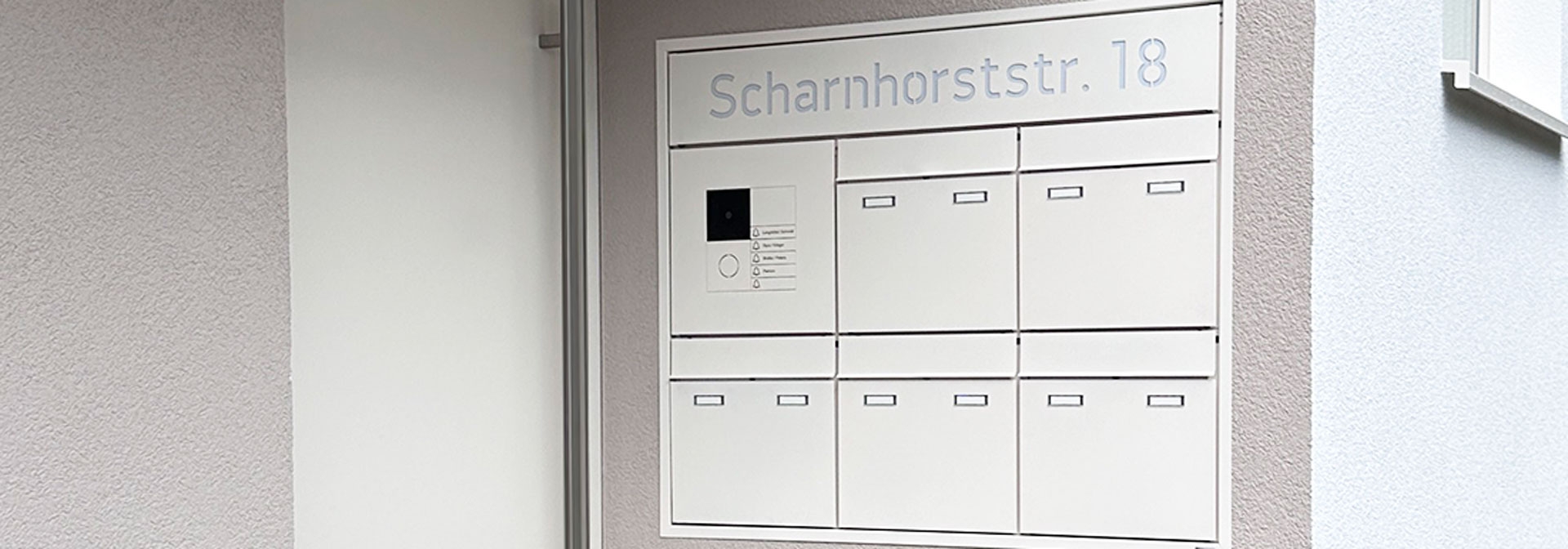
View flush-mounted mailboxes →
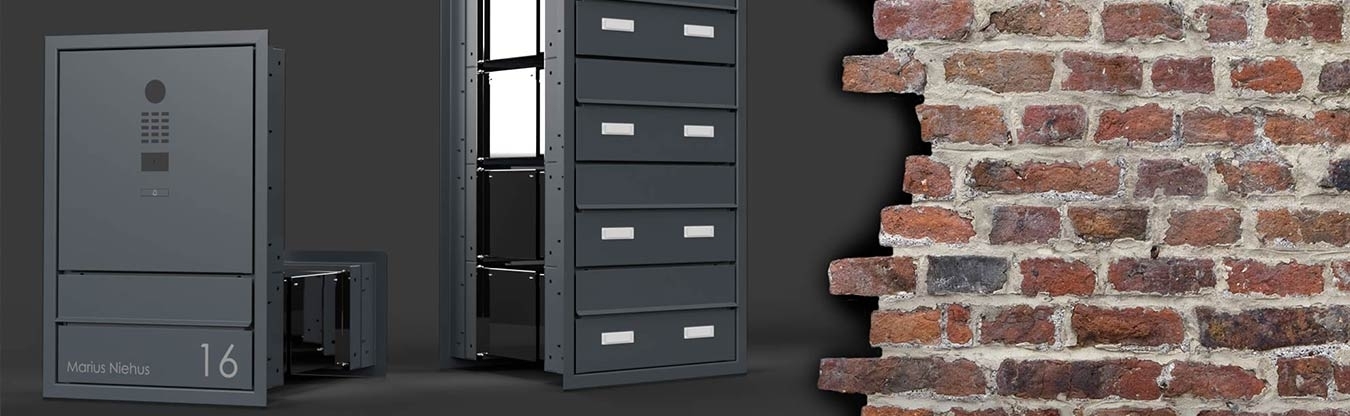
View through-wall models →
| Type | Installation and operation | Important for planning | Select directly |
|---|---|---|---|
| Surface-mounted mailbox | The box is fixed to the finished wall; inlet and collection take place at the front | Check wall construction, total weight, installation depth, fixing points and door swing area | Surface-mounted models |
| Flush-mounted mailbox | The box body is inserted into a wall recess; operation for the available models is at the front | Define wall opening, installation depth, insulation and frame before construction work | Flush-mounted models |
| Through-wall mailbox | The box body or shaft passes through the wall; collection is on the rear side depending on the model | Coordinate wall thickness, shaft depth, outer plate and accessible collection space | Through-wall models |
| Door-side panel mailbox | The system is integrated into the side panel of a front door or entrance unit | Opening dimension, profile, collection side and coordination with the door manufacturer or installation company | Door-side panel solutions |
How is a surface-mounted mailbox securely fixed to the wall?
The wall not only carries the mailbox's own weight but also the mail and the forces generated when doors are opened. It must therefore be even, sufficiently load-bearing and suitable for the intended fixings. Masonry, concrete, timber construction and insulated façades require different fixing concepts.
The operating manuals show that the mounting system also depends on the model: GOETHE is mounted on wall-mounting rails depending on the version, for GRIMM the surface-mounted housing is fixed first and STORM uses specified spacers. The drilling template, screws, plugs or anchors and wall clearance must therefore be taken from the current manual of the ordered model.
For a façade with an external thermal insulation composite system (ETICS) or ventilated cladding, a suitable specialist company should determine the load-bearing fixings and the façade connection. Insulation alone is not a load-bearing substrate.
Which surface-mounted mailbox suits your mail volume?
A compact single box fulfils different requirements than a mailbox system for multiple households. Volume, emptying frequency, newspapers, parcels and door communication should be determined before choosing the size.
Single-family home
For one household, a sufficiently large mail slot, comfortable front collection and enough volume for the usual emptying frequency are important. House number or nameplate can be integrated directly.
Surface-mounted mailboxes for a household →Multi-family house and project
Multiple households need a clear layout, unambiguous nameplates and easily accessible compartments. System dimensions, total weight and possible bell or intercom technology are planned together.
Plan mailbox systems →More volume and newspaper compartment
If you do not empty the mailbox daily or regularly receive larger consignments, you should choose a larger box volume. A separate newspaper compartment keeps rolled items out of the letter compartment.
Large and extra-large models →Models with newspaper compartment →
Parcel compartment and door communication
Parcel compartment, door bell button, camera or intercom increase the system size and require a coordinated operating height. Electronic functions require appropriate power, data and door opener cabling.
Surface-mounted models with parcel compartment →Models with door communication →
Surface-mounted mailbox in stainless steel or anthracite?
Brushed stainless steel has a visible metal grain and suits many modern entrances. Regular cleaning removes deposits, salt and possible foreign rust particles.
Powder-coated galvanised steel allows colours such as RAL 7016 Anthracite grey, RAL 9005 Jet black or an RAL colour of your choice. Which materials and colour combinations are available depends on the specific model.
Even an outdoor mailbox benefits from a protected location. A canopy, the primary exposure to the elements and a fully closed inlet flap influence the protection of the mail. A blanket claim of “completely watertight” would therefore not be appropriate; construction, installation situation and product specifications are decisive.
Frequently asked questions about surface-mounted mailboxes
What is a surface-mounted mailbox?
A surface-mounted mailbox is mounted entirely on a wall. Unlike a flush-mounted or through-wall system, no recess in the masonry is required. The box remains visible with its full installation depth and, for the models in this category, is operated from the front.
Is every wall mailbox a surface-mounted mailbox?
No. “Wall mailbox” is the umbrella term for various solutions on or in a wall. These include surface-mounted, flush-mounted and through-wall mailboxes. Surface-mounted refers exclusively to installation on the wall surface.
Can a surface-mounted mailbox be retrofitted?
In many cases surface-mounted installation is well suited for retrofitting because no wall recess is required. The prerequisites are sufficient space, a load-bearing wall and a fixing system suitable for the wall construction. Cabling for electronic functions must be provided additionally.
Which screws and plugs are required for wall mounting?
This cannot be determined independently of the model and wall construction. Masonry, concrete, timber construction and insulated façades require different fixing materials. Use the current mounting manual and have the fixings professionally planned if load-bearing capacity is unclear.
How high should a surface-mounted mailbox be mounted?
The inlet and collection should be easily reachable for couriers and users, without obstructing doors, paths or other operating elements. For multiple compartments and accessible projects the operating heights must be planned together. Observe the product documentation and the project-specific requirements.
What size should a surface-mounted mailbox be?
The required size depends on parcel format, daily mail volume and emptying frequency. For several delivery days or extensive business mail a larger volume is sensible. External dimensions and installation depth must also fit the available wall area.
Is a surface-mounted mailbox completely watertight?
A blanket watertightness should not be assumed. A protected location, a closed inlet flap and fully inserted mail improve protection. Check the specifications of the specific model and avoid if possible an unprotected orientation towards the main weather exposure.
Can a surface-mounted mailbox include a bell, camera or intercom?
Many models are available with a bell button, camera, intercom, code pad or prepared function panels. The desired system should be specified before ordering. Power supply, data cabling and connection to the door opener are prepared before installation.
Are all surface-mounted mailboxes manufactured to DIN EN 13724?
Compliance with the standard must be checked per product. DIN EN 13724 describes requirements for private household mailboxes and inlet openings, including postal format, protection and usability. Whether a specific model meets the requirements is stated in the respective product information.
Configure a surface-mounted mailbox system to match the façade
Plan the number of boxes, dimensions, colour and additional functions to suit your project. Then coordinate mounting height, fixings and possible cable routes with the intended wall construction.
