

Is a house number mandatory in Germany?
Yes. Under § 126(3) of the Federal Building Code (BauGB), the owner must mark their property with the number assigned by the municipality. How the house number must look, where it must be placed and whether it must be illuminated is often regulated by state law and local bylaws.

What § 126 BauGB requires
The wording is short and unambiguous: “The owner must mark their property with the number assigned by the municipality.” The law additionally refers to state regulations. The obligation is therefore primarily directed at the owner, not generally at the tenant.
The municipality assigns the number. Owners should not independently choose a different number or ignore an official change. Details on position, minimum size, colour, renewal or illumination may be set out in local house-number bylaws.

Who determines the house number and its specification?
Municipality
It assigns the plot number and can determine requirements for attachment and visibility by bylaw.
Owner
They must mark the property with the assigned number and implement changes within applicable deadlines.
Tenant
The statutory basic obligation is directed at the property owner. Contractual agreements may, however, regulate organisational duties.
Size, colour, position and illumination
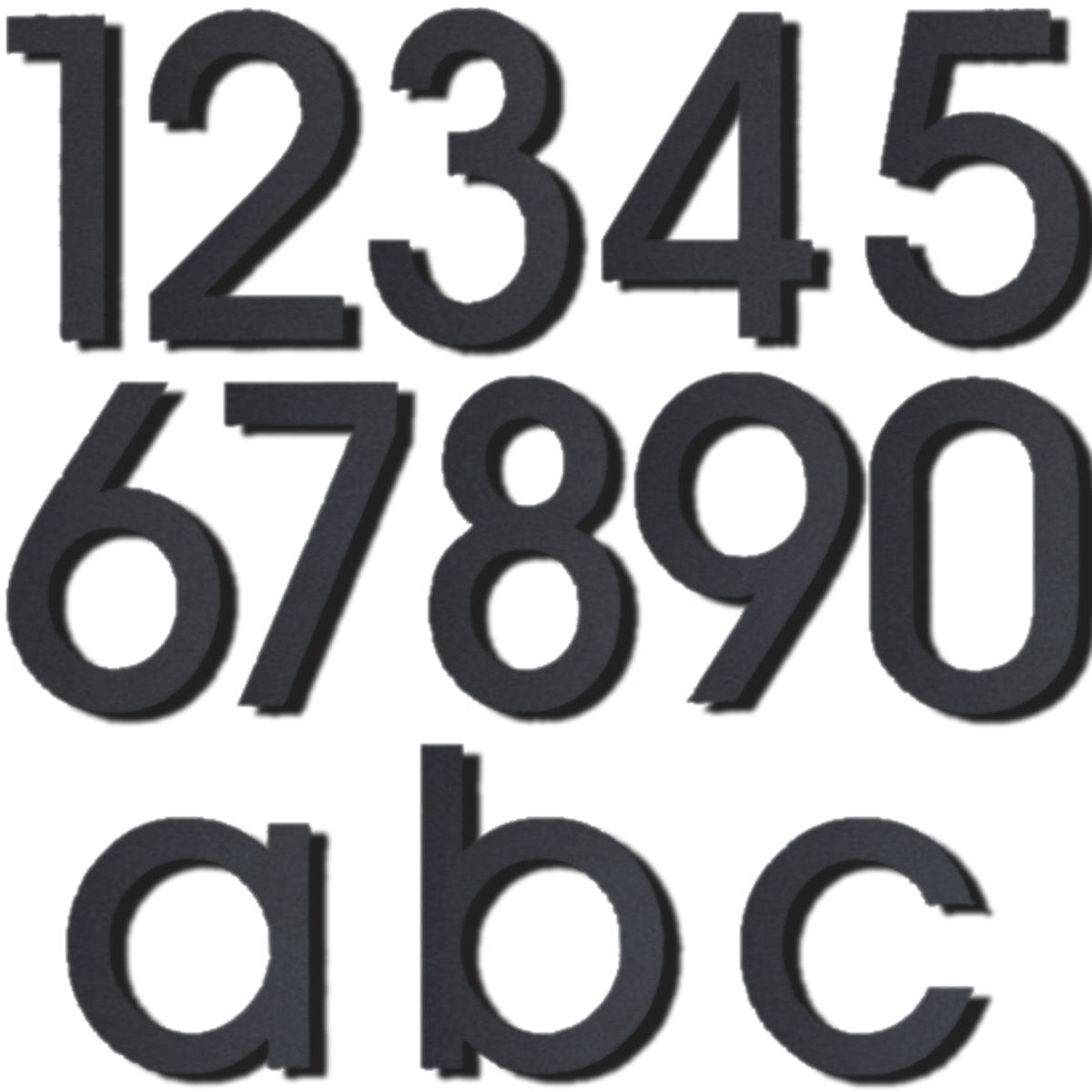
The Federal Building Code does not specify a uniform font size or colour combination for the whole of Germany. Local rules can be very specific. It is often required that the number be clearly visible from the public traffic area, permanent, weather‑resistant and unambiguously legible.
| Criterion | Sensible planning | Check on site |
|---|---|---|
| Position | Near the entrance, property access or street‑facing façade. | Prescribed location and sightline. |
| Lettering | Sufficiently large, clear and high contrast. | Minimum height, font or sign format. |
| Illumination | Easily found in the dark, especially for recessed entrances. | Whether illumination is explicitly required. |
| Change | Remove old number or mark it clearly as invalid. | Transitional period and possible double marking. |
Why a visible house number is important
Emergency services, the fire brigade and the police must be able to find a property without unnecessary searching. Postal, parcel, care and trades services also benefit from a clear marking. An attractive but low‑contrast number behind planting does not reliably fulfil its purpose.
- Check the line of sight from the road and usual access
- Consider vegetation, parked vehicles and open gates
- Test contrast in daylight, dusk and wet conditions
- for multiple buildings, ensure additional markings are clearly organised
- have illuminated systems professionally installed and maintained
House number on the mailbox or on the column
A house number can be integrated into the mailbox front, a design panel or a freestanding column. This consolidates orientation, mail delivery and, if applicable, doorbell or illumination at a single point. The prerequisite is that the chosen location meets the local visibility requirements.
The number must not obscure the letterbox slot, access door, nameplate or technical components. With powder coating, contrasting laser engraving, applied numerals or backlit cut‑outs are possible. For a recessed front door, an additional marking at the property boundary may be required or advisable.
Plan the house number correctly
- Confirm the officially assigned number and its spelling.
- Check the local bylaw on position, size, colour and illumination.
- Test visibility from the public traffic area.
- Coordinate façade, mailbox, column and doorbell aesthetically.
- Plan power supply and ingress protection for illuminated solutions professionally.
- Check regularly after installation and if vegetation grows.
House numbers and mailbox solutions
The specific design must fit the local requirement and the property's sightline.
HÖLDERLIN with house number
Freestanding reception solution with integrated marking at the property entrance.
View product
ELEGANCE house number plaque
Clear house marking as an independent design element.
View product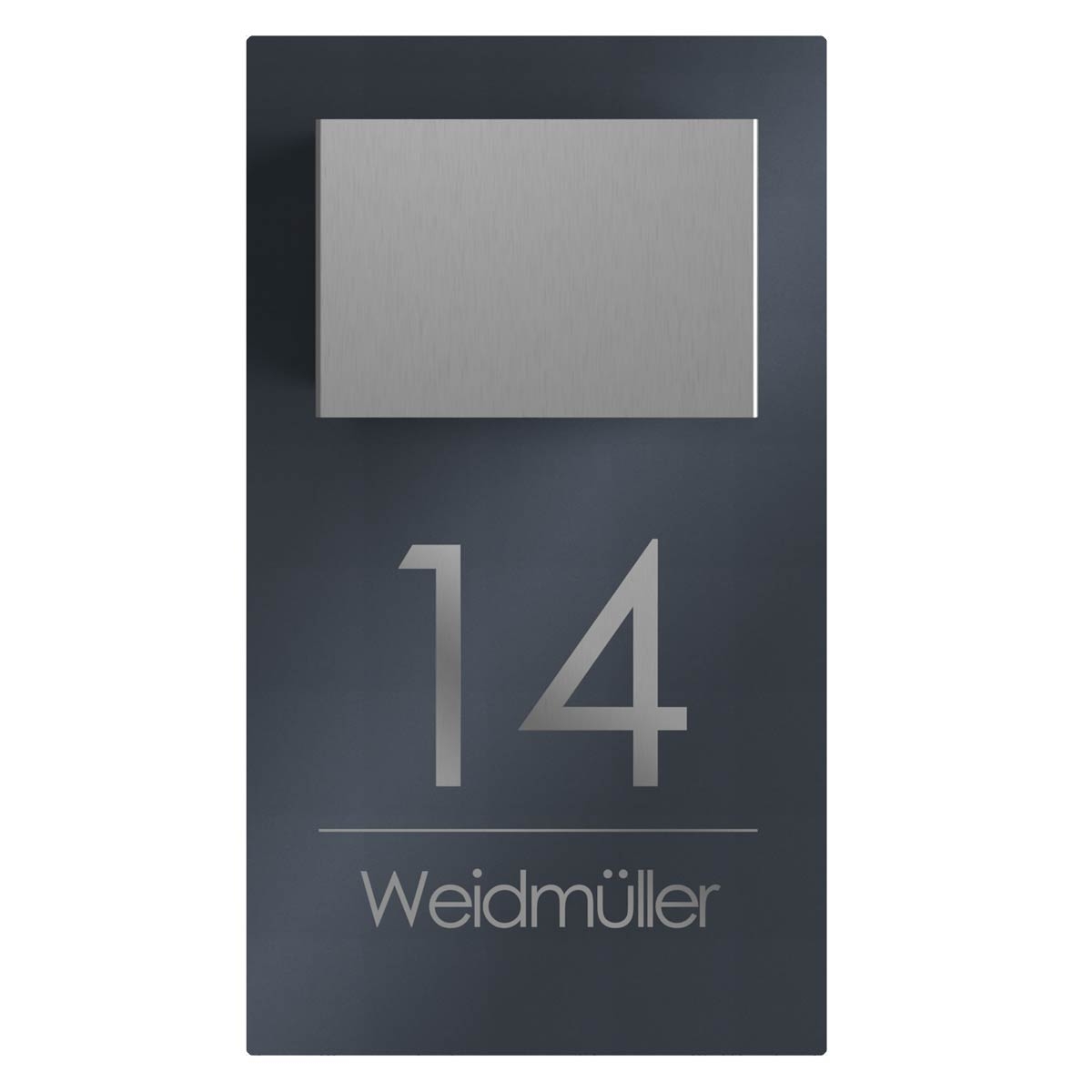
KEPLER SMALL house number light
House number and illumination for improved recognisability in the dark.
View productFrequently asked questions
Is a house number mandatory in Germany?
Yes. Under § 126(3) BauGB, the owner must mark their property with the number assigned by the municipality.
Who is responsible for the house number?
The statutory basic obligation is directed at the property owner. Contractual arrangements may supplement organisational duties.
May I choose my own house number?
No. The number assigned by the municipality is decisive. Choosing a different number yourself can jeopardise unambiguous assignment.
How large does a house number have to be?
There is no single nationwide minimum size in the Federal Building Code. Specific sizes and design rules may result from state law or local bylaws.
Does a house number have to be illuminated?
There is no nationwide blanket requirement for illumination. Local regulations may require illumination or recognisability in the dark.
Where must the house number be placed?
The specific position is often determined by the local bylaw. It should be clearly and permanently visible from the public traffic area.
May the house number be placed on the mailbox?
Yes, if the mailbox location meets local requirements for visibility and assignment. For recessed entrances, an additional marking may be necessary.
What happens when there is a new house number?
Owners must implement the officially determined change in accordance with local requirements. Transitional periods and temporary double marking may be regulated locally.
Integrate the house number visibly into the entrance
First clarify the local requirement and then choose position, contrast, illumination and design accordingly.
