

Building automation planned clearly
Loxone vs. KNX: Differences, combination and alternatives
Loxone and KNX automate lighting, shading, climate, security and access – but follow different approaches. Loxone consolidates logic and operation around the Miniserver. KNX is a manufacturer-independent building standard with distributed intelligence. Which solution fits is therefore not a blanket “better”, but depends on the specific project.
In short
KNX or Loxone – what is the key difference?
Loxone is an integrated automation system whose Miniserver takes over the central logic. KNX, by contrast, is an open communication standard in which functions can be distributed across many bus devices. Both approaches can be combined with professional planning.
For single-family homes Loxone is often attractive when unified operation and rapid function integration are prioritised. KNX scores particularly for long-term manufacturer choice, large projects and clearly distributed building automation. In existing buildings a hybrid solution can be more sensible than a complete system change.
Centralised building automation
What is Loxone?
In the Loxone system the Miniserver is the central control and logic unit. It links sensors, pushbuttons and actuators and executes the programmed automation locally. Planning and commissioning are carried out with Loxone Config; visualisation and operation are tightly integrated into the system.
The system can be extended to lighting, shading, indoor climate, energy, access and other disciplines via Extensions and the Loxone technologies Tree and Air. Conventional pushbuttons, volt-free contacts and selected third-party systems can also be integrated depending on the interface.
Typical strengths
- Unified logic, app and visualisation
- Many automation functions in one system
- Local execution via the Miniserver
- Expandable via interfaces and Extensions
Note: The system architecture, spare-parts strategy and later expandability depend more strongly on the Loxone ecosystem and thorough project documentation.
Manufacturer-independent standard
What is KNX?
Typical strengths
- Products from many certified manufacturers can be combined
- Functions can be distributed across sensors and actuators
- Scalable for residential and complex purpose-built projects
- KNX Secure and KNX IoT extend the platform
Note: KNX projects are planned and commissioned with ETS. An ETS licence appropriate to the project and expertise in topology, addressing and documentation are required.
KNX is an open, manufacturer-independent standard for home and building automation. Sensors, actuators and system components from different manufacturers communicate via a common protocol. Intelligence can be distributed across many participants; a central controller is therefore not mandatory for basic functions.
ETS is the official engineering tool for planning, parameterisation, commissioning and diagnostics. Supplementary visualisations, logic servers and apps can be chosen depending on the manufacturer. For networked projects KNX IP Secure or KNX Data Secure and a segmented network plan should be considered early.
With KNX IoT the standard is also moving closer to IP networks, Thread, Ethernet and Wi‑Fi. KNX is therefore not limited to the classic twisted-pair bus.
Loxone-KNX comparison
Loxone vs KNX in direct comparison
The table compares the system logic – not individual products or bespoke offers. Costs for both solutions mainly arise from project scope, cabling, control cabinet, components, programming, commissioning and documentation.
| Criterion | Loxone | KNX |
|---|---|---|
| System type | Vendor-specific automation system with coordinated hardware and software | Open, manufacturer-independent standard for building automation |
| Architecture | Miniserver as central logic; decentralised inputs and outputs possible | Functions can be distributed across many bus devices; central logic optional |
| Planning | Loxone Config with function blocks, simulation and visualisation | ETS for topology, parameterisation, commissioning and diagnostics |
| Manufacturer choice | Focus on Loxone components and approved interfaces | Wide selection of certified KNX products from various manufacturers |
| Operation | App and visualisation are part of the system concept | Visualisation freely selectable; can range from a simple app to building management |
| Expansion | Via Extensions, Tree, Air and supported interfaces | Via additional KNX components, lines, media couplers and IP/IoT components |
| Typical projects | Single- and multi-family homes, hotels and small to medium-sized commercial properties | Residential buildings, purpose-built facilities and installations planned cross-manufacturer long-term |
| Important planning factor | Miniserver, system boundaries, interfaces and project assurance | Topology, ETS project file, product databases and security concept |
No credible cost answer without planning: A low component price says little about the total costs. You should compare the same functions, the same number of inputs and outputs, control-cabinet construction, cabling effort, visualisation, commissioning, documentation and maintenance.
Hybrid instead of either-or
Combining Loxone and KNX: When does it make sense?
KNX as a stable field level
Sensors and actuators remain within the KNX system. Loxone supplements central logic, the app, visualisation or cross-discipline automations.
Extending existing installations
An existing KNX installation does not need to be replaced when additional Loxone functions are desired. What matters is a clearly defined system boundary.
Document responsibilities
For each function it should be clear which system is leading. Otherwise duplicate logic, contradictory states and hard-to-trace faults can occur.
The Loxone KNX Extension integrates KNX components into Loxone Config. KNX devices are still addressed and parametrised with ETS; according to Loxone an external KNX gateway and a dedicated KNX power supply are also required. Commissioning should be carried out by a qualified electrician.
More search relevance, clearly categorised
Which other smart-home and building automation systems are relevant in 2026?
Matter, Home Assistant, Homematic IP and BACnet generate additional search queries around “Loxone alternative” and “smart home systems comparison”. However, they are not direct competitors to KNX or Loxone in every project.
Matter vs. KNX
Matter standardises the integration of compatible smart‑home devices over IP, Wi‑Fi and Thread. Since Matter 1.5 cameras and video doorbells are also part of the standard; Matter 1.5.1 improves streaming, doorbell and two‑way audio in 2026, among other things.
Matter does not replace comprehensive KNX engineering. It is primarily an interoperability layer for devices and platforms.
Home Assistant with KNX
Home Assistant is a local integration, automation and visualisation platform. Via a KNX/IP interface or a KNX/IP router Home Assistant can read states, process telegrams and control KNX devices.
The platform often complements KNX as an operation and integration layer, but does not automatically replace its bus infrastructure or ETS project engineering.
Homematic IP
Homematic IP combines wireless and wired components for heating, shading, lighting, security and access. The system can start small and is therefore particularly suitable for retrofitting and step‑by‑step expansion.
When deciding, consider operating mode, central unit, local functions, radio coverage, product range and desired interfaces.
BACnet
BACnet is a manufacturer-independent communication standard for technical building services. It is particularly relevant in larger commercial and purpose-built projects for HVAC, energy management, lighting, access and overarching building management.
BACnet and KNX can cover different layers in a building and work together via gateways.
Other terms with technical context: DALI is especially relevant for lighting control, Modbus often for meters, inverters and technical equipment. Both are specialised interfaces rather than a full replacement for KNX or Loxone.
Decision guide
Which system suits which project?
New-build family home
Loxone is interesting when a consistent operation and automation concept is desired. KNX is recommended when long-term manufacturer choice, distributed functions and later expandability are particularly important.
Renovation and retrofit
Wireless components from Loxone Air or Homematic IP can reduce cabling effort. An existing KNX system can often be sensibly supplemented with logic, visualisation or new interfaces.
Commercial, hotel or purpose-built projects
Here scalability, roles, maintenance, redundancy, IT security and building management are important. KNX, Loxone and BACnet can, depending on size and trades, also be used together.
Door communication and access control
Building automation starts at the entrance
Door communication, access control and the mailbox system should be included early in the electrical planning. For Loxone this can include prepared installation positions for Intercom, NFC Code Touch or Touch Pure. Electronic locks and door openers need appropriate power supply, cable routing and volt-free or documented interfaces.
Whether doorbell events, access authorisations or status messages later flow into KNX, Loxone or a higher-level platform depends on the components actually used. Mechanical preparation therefore does not replace a check of electrical and software compatibility.
Directly suitable solutions
Mailboxes for Loxone Intercom and Code Touch
The following models are prepared for selected Loxone components. Please check before ordering the exact configuration, scope of delivery and the requirements of your electrical and access concept.
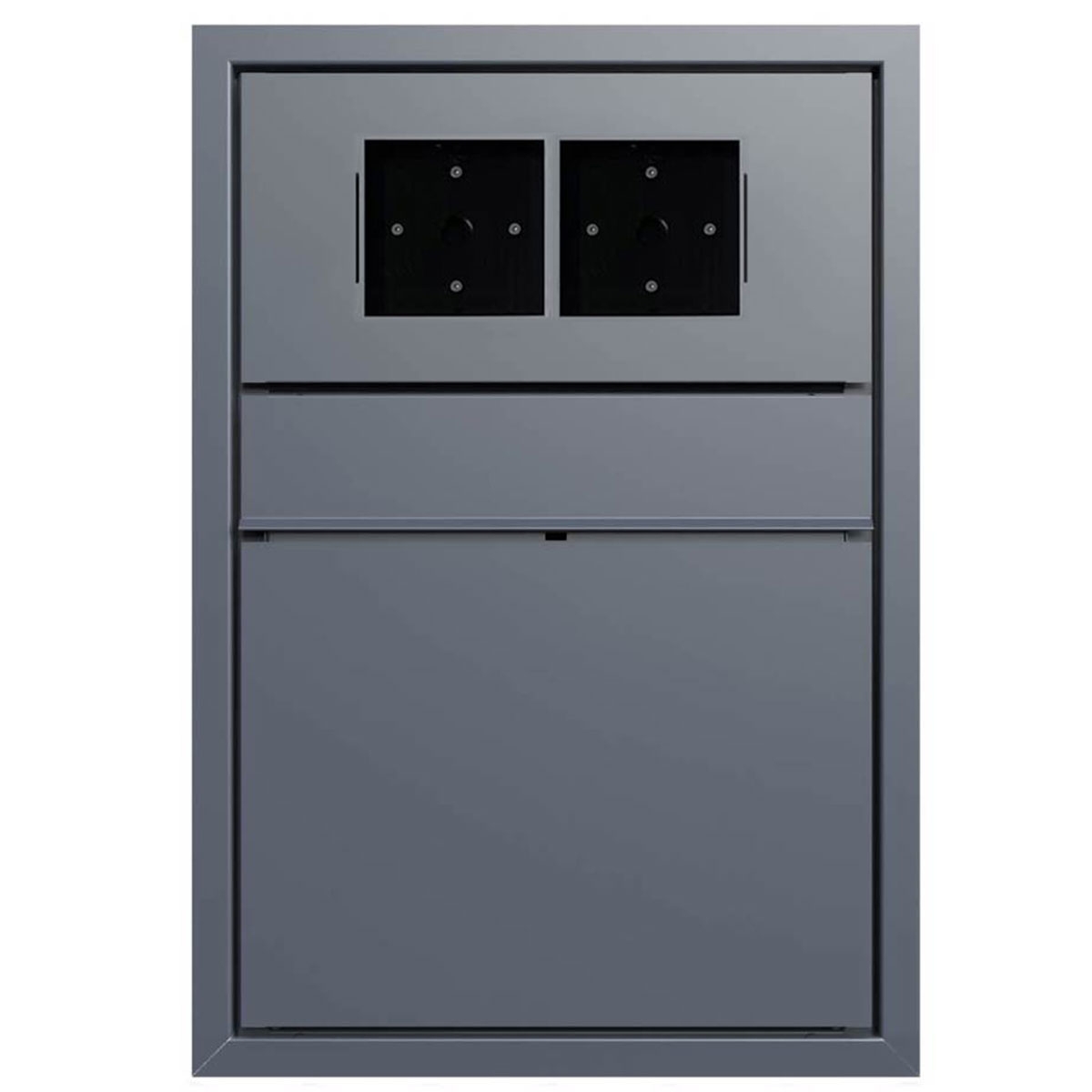
GOETHE UP – Loxone Intercom 2x1
Design flush-mounted mailbox in a RAL colour of your choice, prepared for Loxone Intercom in 2x1 format.
View product →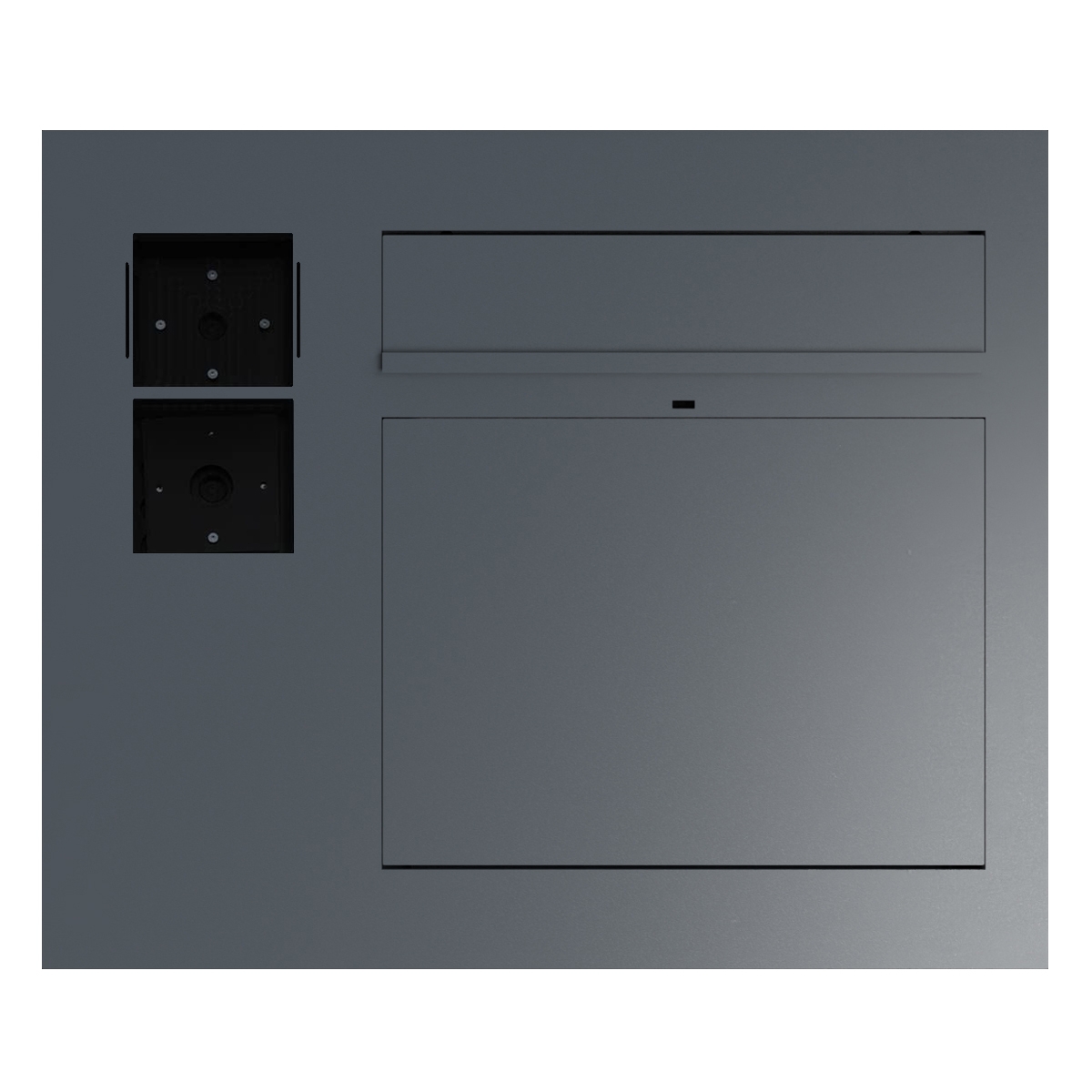
GRIMM UP – Intercom and Code Touch
Flush-mounted solution in the desired colour with left-positioned preparation in 1x2 format.
View product →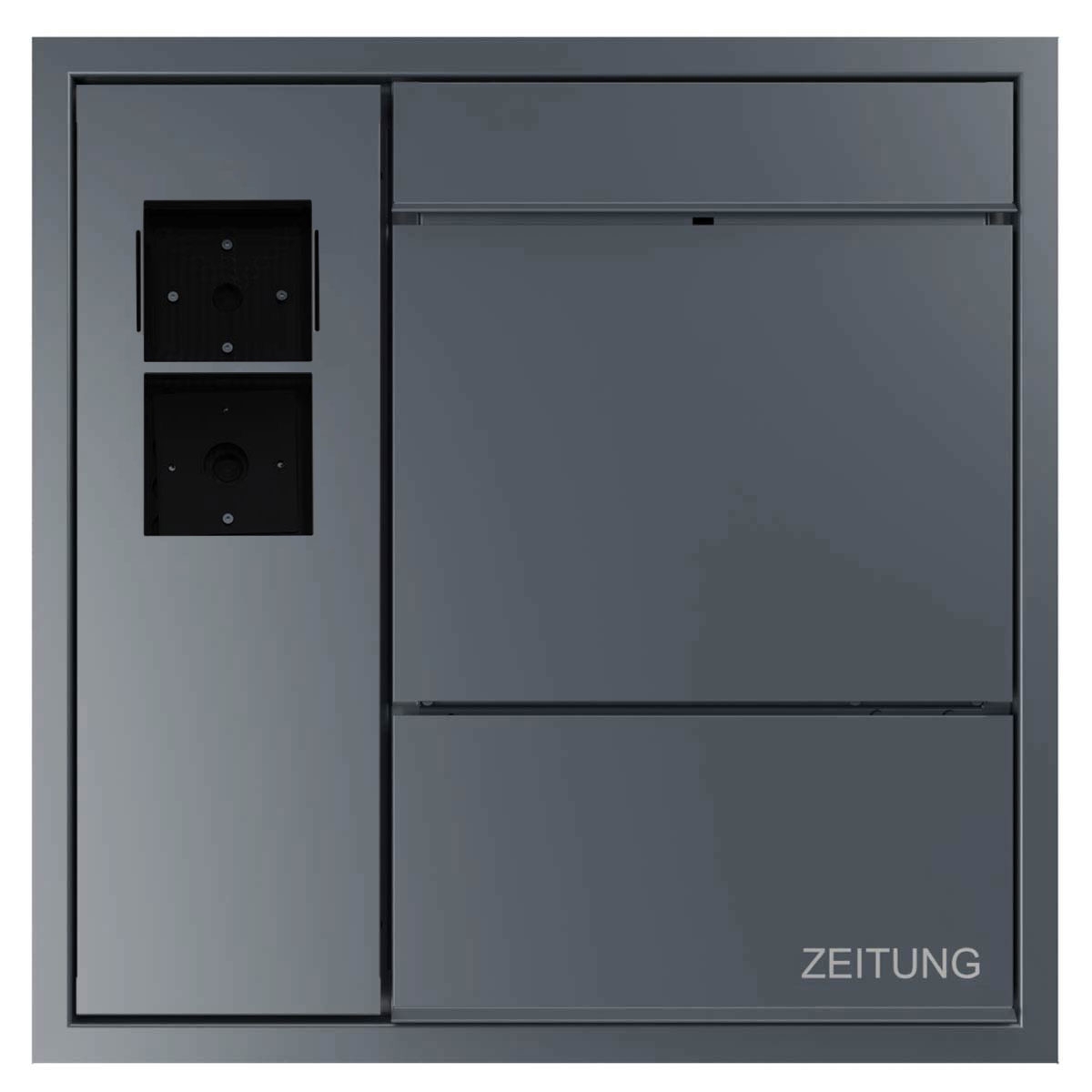
GOETHE UP side-mounted with newspaper compartment
Side-oriented flush-mounted mailbox with newspaper compartment and preparation for Loxone Intercom.
View product →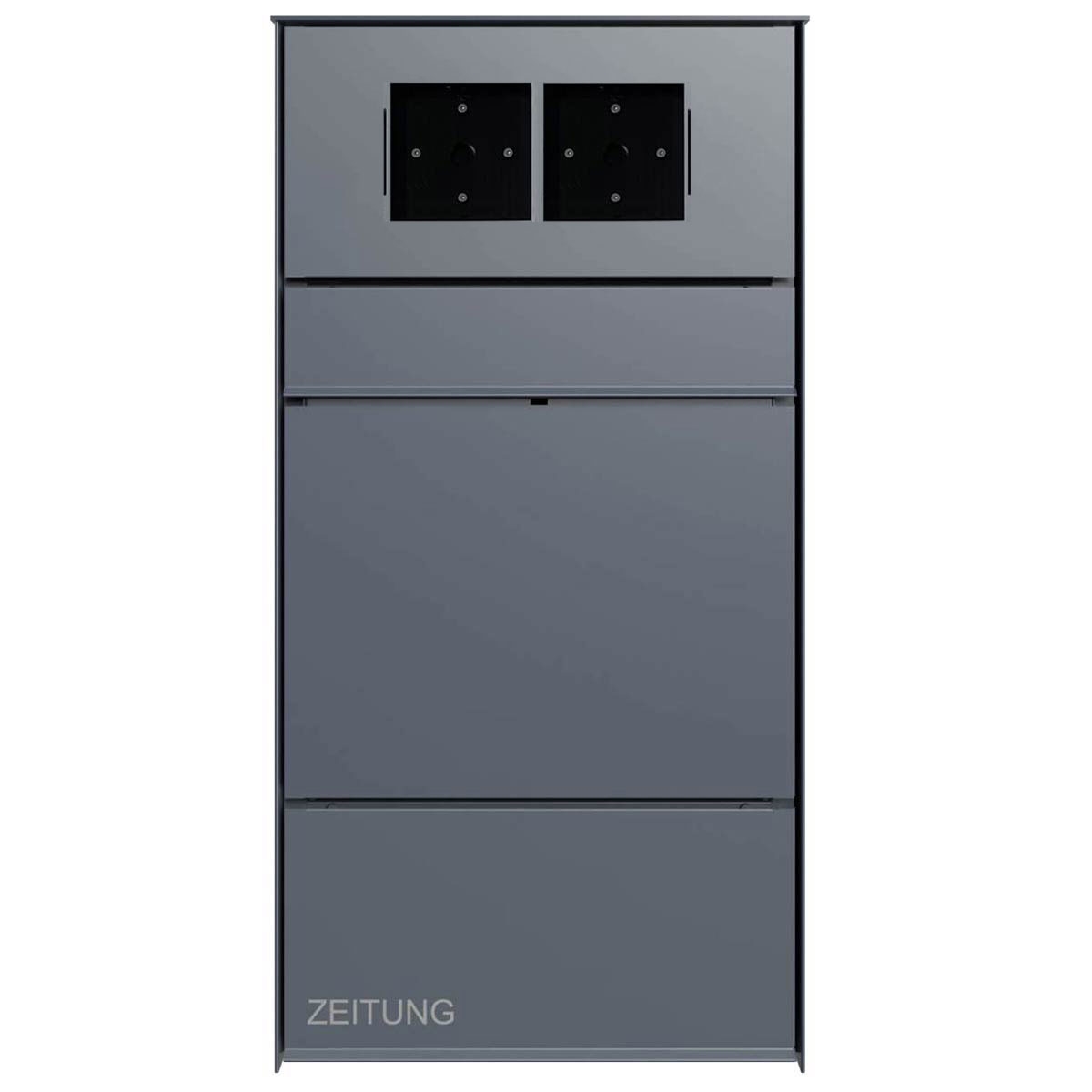
GOETHE AP – Intercom and Code Touch
Surface-mounted mailbox with newspaper compartment, prepared for Loxone Intercom and Code Touch.
View product →Frequently asked questions
FAQ on Loxone, KNX and other systems
What is the biggest difference between Loxone and KNX?
Loxone organises automation centrally around the Miniserver and a coordinated ecosystem. KNX is an open standard where functions can be distributed across devices from different manufacturers.
Is KNX or Loxone better?
It depends on the project. Loxone is convincing for a tightly integrated overall solution with unified operation. KNX offers particularly wide manufacturer choice, distributed functions and long-term openness. A combination can also be the best solution.
Can Loxone and KNX be combined?
Yes. KNX components can be integrated via the Loxone KNX Extension. KNX devices must still be addressed and parametrised with ETS; additionally the KNX components specified by Loxone for gateway and power supply are required.
Does Loxone Config replace the ETS software?
No. Loxone Config programs the Loxone logic. ETS is still used for addressing and parameterisation of KNX devices.
Is KNX decentralised?
KNX allows distributed intelligence: sensors and actuators can exchange functions directly without a central computing unit being necessary for each basic function. Visualisations and complex logic servers can, however, still be added centrally.
Is Matter an alternative to KNX?
Matter facilitates the manufacturer-independent integration of compatible smart‑home devices. Matter does not automatically replace a fully professionally planned KNX building automation. Both standards can serve different layers of a project.
Can Home Assistant control KNX?
Yes. With a KNX/IP interface or a KNX/IP router Home Assistant can read KNX states, process telegrams and operate devices. KNX project engineering with ETS remains separate.
Is Homematic IP a Loxone or KNX alternative?
For smaller residential projects and retrofits Homematic IP can be an alternative. For large, multi-discipline or long-term manufacturer-independent planned installations the system depth and architecture differ significantly.
When is BACnet relevant?
BACnet is mainly relevant in larger purpose-built and commercial buildings for HVAC, energy management and overarching building management. KNX can handle the room automation in parallel.
Can a mailbox be integrated into building automation?
Door communication, doorbell, access and door openers can be integrated depending on the components and interfaces used. Mailbox and stand must be mechanically prepared and the electrical, network and security concepts planned together.
Coordinate interfaces early
Plan mailbox, door communication and building automation together
We support you in selecting a suitable mailbox solution and align installation positions, mounting type and design with your Loxone or access concept.
Technical information status: 28 July 2026. Electrical work and commissioning only by qualified professionals.
